 Hardball
Preaching
Hardball
PreachingSermon by the Rev. Andrew S. Rollins
June 15, 2008 (Proper 6A)
Title: “How Much He Loves You”
Text: Romans 5:6 - 11
Hardball
Preaching
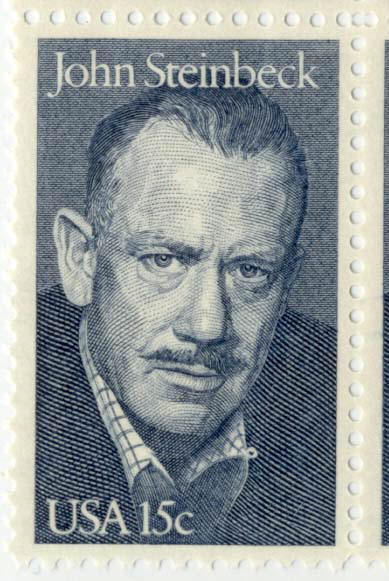
In his travelogue Travels with Charley, John Steinbeck describes a Sunday visit to a New England church. Sitting in this New England church, Steinbeck hears the minister deliver a no-nonsense sermon on the subject of sin. Oddly enough, Steinbeck reflects favorably on the experience: “For some years now, God has been a pal to us, practicing togetherness, and that causes the same emptiness a father does playing softball with his son. But this Vermont God cared enough about me to go to a lot of trouble kicking the Hell out of me. He put my sins in a new perspective. Whereas they had been small and mean and nasty and best forgotten, this minister gave them some size and bloom and dignity. I hadn’t been thinking very well of myself for some years, but if my sins had this dimension, there was some pride left. I wasn’t a naughty child but a first-rate sinner, and I was going to catch it” (Steinbeck).
Like that New England preacher that got Steinbeck’s attention, the apostle Paul is willing to play hardball with us.
Deacon Linda and I are preaching through major passages in Romans now. Today we arrive at chapter 5. In this short paragraph from chapter 5, Paul refers to all of us (to all human beings) as ‘weak’, ‘sinful’, ‘ungodly’ and – strongest of all – ‘enemies’ of God: For if while we were enemies, we were reconciled to God through the death of his Son, much more surely, having been reconciled , will we be saved by his life. Weak, sinful, and ungodly are not flattering. But ‘enemies’ of God is even worse. ‘Enemy’ doesn’t refer to someone who just comes up a little short of being a friend (Morris). ‘Enemy’ means someone who has gone so far as to actively join the other side.
Rescue on the High Seas
Paul writes, But God proves his love for us in that while we were still sinners Christ died for us (5:8). And then, For if while we were enemies, we were reconciled to God through the death of his Son . . . . “While we were sinners . . . while we were enemies.” God rescued us at a crucial moment – at the moment when we were sinners, at the moment we were his enemies.
The Advocate ran a story last Tuesday about five survivors of a sailing accident. Their sailboat capsized and four Texas A&M students and regatta racers (and the one captain) floated in the Gulf of Mexico for 26 hours before they were rescued. The article was about how much the five contributed to their own rescue. They didn’t panic. They lashed themselves together and shared life vests. They took turns keeping watch for the search crews. They even told jokes to keep up their spirits. As birds circled overhead, one student called out jokingly, “Lassie, Lassie, Timmy’s hurt, go get the Coast Guard.” The Coast Guard divers who finally rescued them commented on what a great job the four did in contributing to their own rescue.
That’s how I want to be saved! I want people to laud my contribution to my own rescue. When I get to heaven, I want Jesus to say, “In most cases, the people I rescue are really a mess. They even fight being saved. But in Drew’s case, he was just so composed and helpful. He really played a remarkable role. In fact, you could hardly say I saved him; it was more like a cooperative effort.”
The fact is that drowning people completely lose all composure. They become the enemies of anyone who attempts to rescue them. That’s why lifeguards are taught to swim underneath a drowning person, to jerk them down below the surface, to spin them around backwards, and then to grab them firmly across the chest -- because a person who is truly drowning WILL panic and try to save themselves by clawing and clamoring on top of their rescuer. They WILL become the enemy of their rescuer.
It’s that second image of a rescue that fits the biblical story. That’s the
picture that Paul is painting of the human being as the enemy of God, and of
Jesus as the Great Rescuer: But God proves his love for us in that while we
were still sinners Christ died for us (5:8). And then, For if while we
were enemies, we were reconciled to God through the death of his Son . . . .
We want to be applauded (like those Texas A&M students) for the impressive
contribution we made to our own rescue. But Paul insists that we were rescued at
the very moment that we were enemies of our Rescuer.
Confidence!
For if while we were enemies, we were reconciled to God through the death of his Son, much more surely, having been reconciled , will we be saved by his life. Paul repeatedly drives home this point about us being ‘at our worst’ for a reason. He plays hardball with us for a reason. He insists we were rescued while we were enemies of God because that’s the basis of our confidence now. Since God gave his all for us when we were at our worst, we can be confident that he is going to remain committed to us (at our best).
Eugene Peterson paraphrases the verse this way: “If, where we were at our worst, we were put on friendly terms with God by the sacrificial death of his Son, now that we’re at our best, just think of how our lives will expand and deepen by means of his resurrected life!” (Eugene Peterson).
How Do I Love You?
We have a little board book in our home that we’ve read to our children called How Do I Love You? It’s sort of a love poem from parent to child with the simple message that “I love you unconditionally.” “How do I love you? Let me count the ways. I love you on your very best . . . (picture of a little having made breakfast for his mommy) . . . and very worst of days (picture of a little boy drawing with crayons on the walls of his room./ And I’m sorry when you’re sad . . . And even though it may not show, I love you when you’re bad (picture of a boy pouting).” You get the idea.
Why is this a good book for a child to hear again and again? Because the basis for a child’s confidence will be the unconditional love of their parents. A parent their love for their child at that moment when they are at their weakest, at their worst.
I’m just saying the same thing in about five different ways. Which is what Paul is doing.
Paul is trying to convince you that because God acted to save you when you were at your worst, at your weakest, you can be confident that God is going to continue his love for you to this VERY MORNING -- and for all eternity. For if while we were enemies, we were reconciled to God through the death of his Son, much more surely, having been reconciled , will we be saved by his life. God is eternally committed to you. God loves us unconditionally.
But what does that mean? How do we get that down into the marrow of our bones?
We hear that again and again . . . but will we ever really believe it, deep in our hearts?
The Greatest Sacrifice
Patrick Morley, in his book The Man in the Mirror, tells a heart-wrenching story about an ill-fated Alaskan fishing trip.
A group of fisherman had landed in a secluded bay in Alaska and had a great day of fishing for salmon. But when they got back to their sea plane, they were surprised to discover that it was aground because of the fluctuating tides and they had no option but to wait for the next morning when the tides came in.
But when they took off they only got a few feet off the ground before they came crashing down into the sea, because being aground the day before had punctured one of the pontoons and it had filled up with water.
The sea plan slowly began to sink. There were three men and 12 year-old son Mark – son of one of the three. They all prayed and then they jumped into the icy cold waters to swim to shore. But the water was so cold and the riptide so strong that the two men reached shore exhausted.
But they looked back and their companion, who was also a strong swimmer, did not swim to shore because his 12-year old son was not strong enough to make it.
They saw that dad . . . with his arms around his son . . . being swept out to sea
He chose to die with his son rather than to live without him.
That’s the nature, the quality . . . the depth, of the love your Heavenly Father bears for you.
That’s how much He loves you.